

An MVP tests whether anyone wants your product before you spend real money building it. An MMP is the version you launch and sell, built only once that demand is proven. If you're still finding out whether the idea works, you need an MVP. If you already know, and need something customers will pay for on day one, you're building an MMP. Launch MVP Fast builds both stages for non-technical founders on a fixed timeline, and the founders who move fastest from one to the other are the ones who know exactly which stage they're in.
- MVP vs. MMP at a glance
- What is an MVP?
- What is an MMP?
- Three companies that moved from MVP to MMP
- How to know your MVP is ready to become an MMP
- Common mistakes when moving from MVP to MMP
MVP vs. MMP at a glance
| MVP | MMP | |
|---|---|---|
| Question it answers | Does anyone want this at all? | Will someone pay for this, today? |
| Goal | Test one assumption with the least effort possible | Launch something the market will buy |
| Audience | A small group of early testers | Your real target market |
| Feature set | The minimum needed to test the assumption | Everything required to compete and earn trust |
| When you use it | Before you know if the idea works | Once demand is proven and you're ready to sell |
Everything below expands on this table, including three companies whose products moved from one column to the other.
What is an MVP?
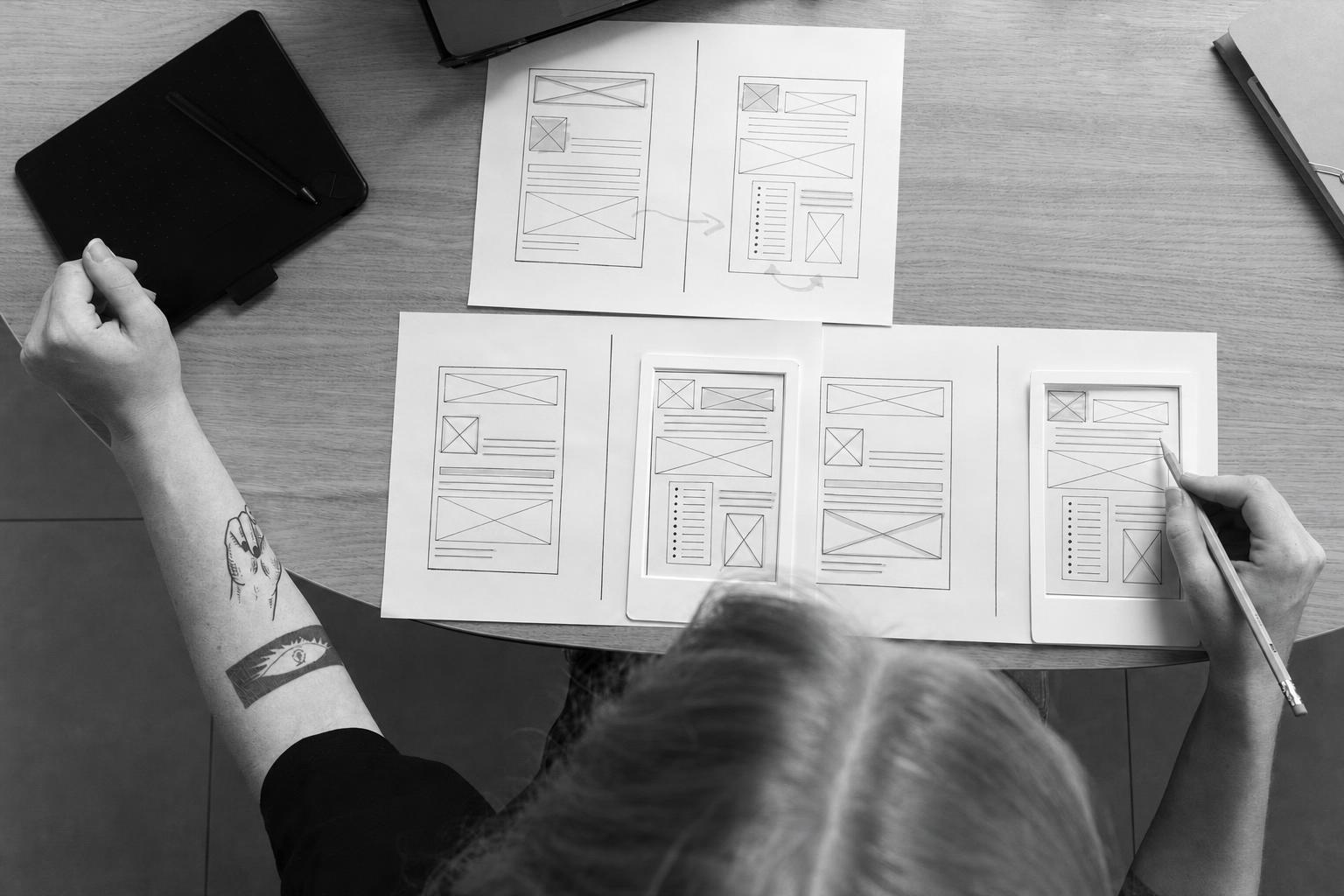
An MVP, or minimum viable product, is the smallest version of a product that answers one question: does this problem matter enough for someone to change their behavior over it. Eric Ries defined the term as the version of a product that lets a team collect the maximum validated learning with the least effort, and that framing still holds. An MVP doesn't need to be sellable, scalable, or even fully automated behind the scenes. It needs to produce a real answer.
That's why an MVP can look strange compared to a finished product. A landing page with a signup button that doesn't work yet, a manual process pretending to be software, a prototype with three screens and no backend, all of these count as MVPs if they test the actual risk. The risk being tested is rarely "can we build this." More often, it's "does anyone care." For a fuller breakdown of what belongs in that first version, see what features an MVP should include.
What is an MMP?

An MMP, or minimum marketable product, is the smallest version of a product that's complete enough to sell. Once an MVP proves people want the thing, the MMP is what turns that proof into a real business: reliable enough to trust, complete enough to compete, and polished enough that a stranger will hand over a card number for it.
"Complete enough to sell" means three things an MVP can skip. Real payment processing instead of a paper invoice or a founder's personal Venmo. Security and data handling that survive contact with a stranger's information, not only a friendly early tester's. And support for the account states a real customer hits, canceling, upgrading, forgetting a password, that a scrappy MVP can quietly ignore because there are only ten people using it and you know all of them by name.
The shift from MVP to MMP is a shift in audience. An MVP only has to convince a handful of forgiving early testers. An MMP has to hold up against the market's real alternatives, including competitors who didn't have to launch anything half-finished. That's a higher bar, and it's why MMPs take longer and cost more to build than the MVP that came before them. For what that jump typically costs, see how much it costs to build an MVP.
Three companies that moved from MVP to MMP
Reading MVP vs. MMP definitions is one thing. Recognizing the pattern in an actual MVP vs. MMP example is another. The three companies below each answered the same underlying question, does anyone want this, and each moved to a sellable version once they had a real answer, but they arrived at that answer through very different tests. For more MVP origin stories beyond these three, see our roundup of famous MVP examples.
Airbnb tested demand with three air mattresses before building anything close to a real product. In October 2007, Brian Chesky and Joe Gebbia put air mattresses in their San Francisco living room during a sold-out design conference and charged three guests $80 a night, with breakfast included. There was no booking platform, no multi-city listings, no payment processing. The MVP tested one question: will a stranger pay to sleep in someone else's living room? Once the answer was yes, the founders spent the next year building the actual marketplace, listings, payments, trust and safety, that became the MMP the business was built on. That year wasn't smooth: growth stayed flat for months, and Y Combinator's Paul Graham was skeptical of the idea before backing it. The MVP had answered whether the idea worked; it hadn't made the MMP easy to build or fund.
The original iPhone skipped the MVP stage entirely and launched straight as an MMP. When Apple unveiled it in January 2007, it shipped without an App Store, copy-paste, MMS, or video recording, features most competing phones already had. Apple wasn't testing whether people wanted a smartphone; it was confident enough in that demand to skip straight to a constrained but fully sellable product, then add the missing pieces over the next two years (the App Store arrived in July 2008, copy-paste and MMS in 2009). This is the case for skipping the MVP stage: when the evidence for demand already exists, testing it again delays the launch and adds nothing new.
Buffer proved people would pay before a single line of the product existed. In 2010, Joel Gascoigne built a two-page site that described Buffer as if it already worked; clicking "Plans and Pricing" led to a page admitting the product wasn't ready yet and asking for an email address. Over seven weeks the page collected 120 signups. When Buffer launched, 50 of those signups became early users, and the first paying customer converted three days later. The MVP was a promise with no product behind it. The MMP was the scheduling tool built once that promise had real signups and a paying customer attached to it.

How to know your MVP is ready to become an MMP

Three signals matter more than a gut feeling. People use the MVP without being prompted or reminded, which means the core idea is pulling its own weight instead of relying on your encouragement. Someone tries to pay for it, even informally, even before you've set up a way to charge, which is the strongest signal available because money is harder to fake than enthusiasm. And the same specific request keeps showing up from people who don't know each other, which means the market is converging on what to build next instead of you guessing at it.
One of these signals is encouraging. Two or more, and any unprompted payment attempt, means the MVP has done its job and further testing delays the launch instead of adding new information. Buffer's story is signal two in its purest form: no payment system existed behind that two-page test, but 120 people signed up anyway and one paid within three days of the real launch. That's the pattern to watch for, not a specific number of users.
Common mistakes when moving from MVP to MMP
Treating "people like it" as the same signal as "people will pay for it." Positive feedback on a free MVP tells you the idea has some appeal. It doesn't tell you the market will fund it. Buffer's team didn't move forward on enthusiasm alone; they waited for a signup list and a paying customer.
Adding all the features testers asked for instead of the one they asked for repeatedly. An MVP surfaces a wide, noisy list of wants. An MMP only needs the few that showed up across unrelated users. Building all of them turns a focused launch into a delayed one.
Rebuilding from scratch instead of hardening what already works. The core assumption the MVP proved rarely needs to change for the MMP; what needs to change is reliability, security, and polish around it. Airbnb didn't reinvent the idea of a stranger renting a room. It built the trust and payment infrastructure that made the same idea sellable at scale.
Launching the MMP to the same small, forgiving group that tested the MVP. Early testers already believe in the product. The MMP has to work for people who don't, which is a different and higher bar than the one the MVP cleared.
Assuming the MVP's improvised backend can carry a real launch. A spreadsheet standing in for a database, a founder confirming each booking by hand, a fake pricing page with no billing behind it, these get a pass during testing because the volume is low and the stakes are personal. Airbnb's founders learned this directly: three guests on air mattresses didn't need a payments platform, but a real marketplace did, and building it took a year.
The mmp vs mvp question comes down to which job you're doing right now: proving an idea, or selling one you've already proven. If you're deciding between building an MVP to test an idea or an MMP to launch one you've already validated, Launch MVP Fast's estimate tool scopes either one in a few minutes, no call required.
Questions, answered.
An MVP tests whether anyone wants your product, using the least effort that still produces a real answer. An MMP is the version you launch and sell once that demand is proven. An MVP can be a landing page or a manual process behind the scenes; an MMP has to be a complete, trustworthy product a stranger will pay for.
MMP stands for minimum marketable product: the smallest version of a product that's complete enough to sell to real customers and compete in its market. It comes after the MVP stage, once you know the product is worth building for real.
Yes, and some companies do it deliberately. The original iPhone launched in 2007 without an App Store, copy-paste, or MMS, features most competing phones already had, because Apple was confident enough in the core idea to skip a test phase and launch a constrained but polished product directly. Skipping the MVP works when the team already has strong evidence the market exists, not when it's a shortcut to avoid testing.
Look for three signals: people are using the MVP without you prompting them, someone has tried to pay for it even if you weren't set up to charge yet, and the same feature request keeps coming from unrelated users. One signal is encouraging. Two or more, and any unprompted payment attempt, means the market has already told you what to build next.
No. MLP, minimum lovable product, is a different axis: it argues a product should be delightful, not only functional, from the first release. MVP vs MMP is about how much market-readiness a product needs before launch. A team can build an MVP, an MMP, or an MLP at any of those stages depending on which risk they're managing: whether anyone wants it, whether it's sellable, or whether people will love it enough to stay.